Vibe Coding Revives Apple Store
The mobile app store market, represented by the App Store, has faced development challenges in recent years, with some arguing that apps may gradually disappear in the era of AI agents. However, an unexpected yet reasonable phenomenon has emerged this year: apps created through vibe coding have revitalized this old industry, leading to a surge in new app submissions and listings.
Data from third parties shows that app submissions to the Apple App Store increased by 84% year-on-year in Q1, reversing a decade-long decline.
Vibe coding tools like Claude Code and Codex have significantly simplified the app design process, allowing ordinary individuals to create their own apps, something that was previously unimaginable. The main cost for individuals looking to list their apps on the App Store is the annual fee of 688 yuan for an Apple developer account.
High Homogeneity of Vibe-Coded Apps
A search of the China App Store reveals that apps created through vibe coding are highly concentrated in the following categories:
- Todo list apps
- Diary apps
- Expense tracking apps
These apps resemble personal projects by developers rather than mature commercial products. For instance, a new todo list app named DoitWith, which claims to be created using vibe coding, features a relatively novel “four-quadrant” design but has little differentiation from Apple’s built-in Reminders app. This means another developer could easily replicate it at a pixel level.
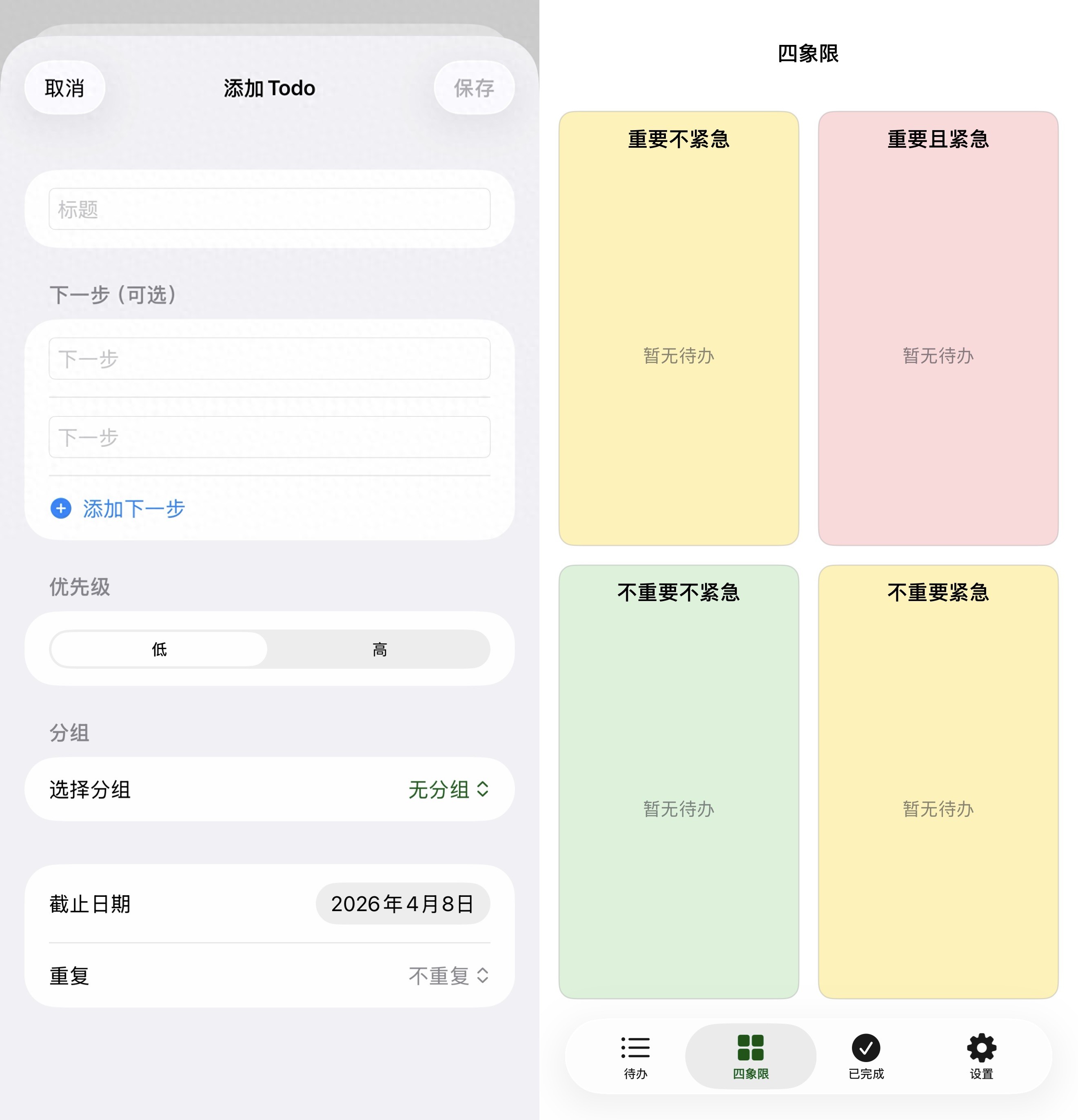 DoitWith (Image source: 雷科技)
This trend is also evident in diary and expense tracking apps, although the latter can still exhibit some creativity, making them a more “advanced” form of work.
雷科技 noted a diary app called Coffee-Mood, which targets coffee enthusiasts by helping them track their daily visits and moods, even supporting a desktop widget to remind users if they have had coffee that day.
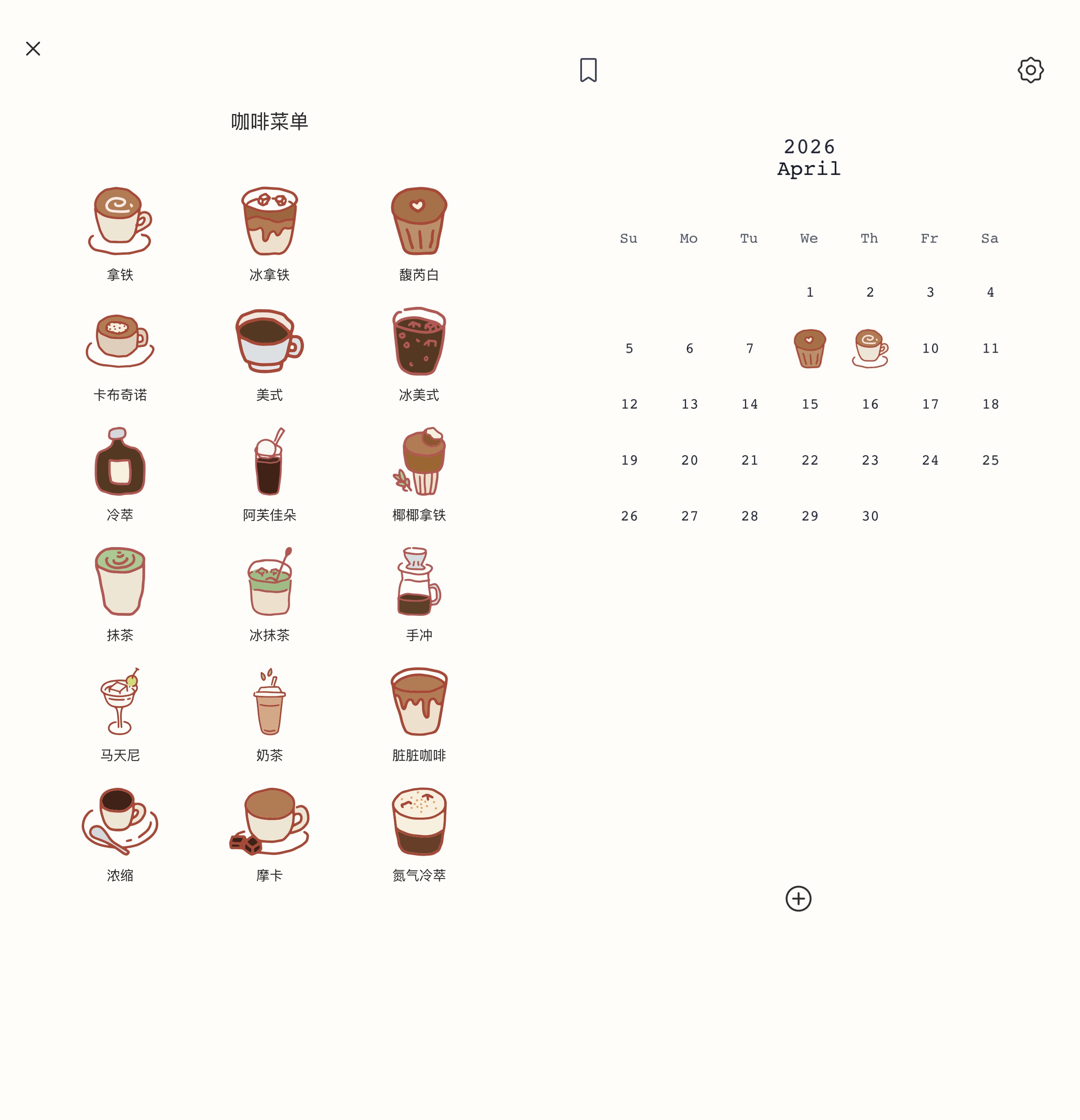 Coffee-Mood (Image source: 雷科技)
In the expense tracking app category, many personal developers have released vibe-coded products. Up Up Track is a standard-style expense tracking app targeting overseas markets, currently available only in English. For individual developers, distributing globally offers a differentiated competitive strategy.
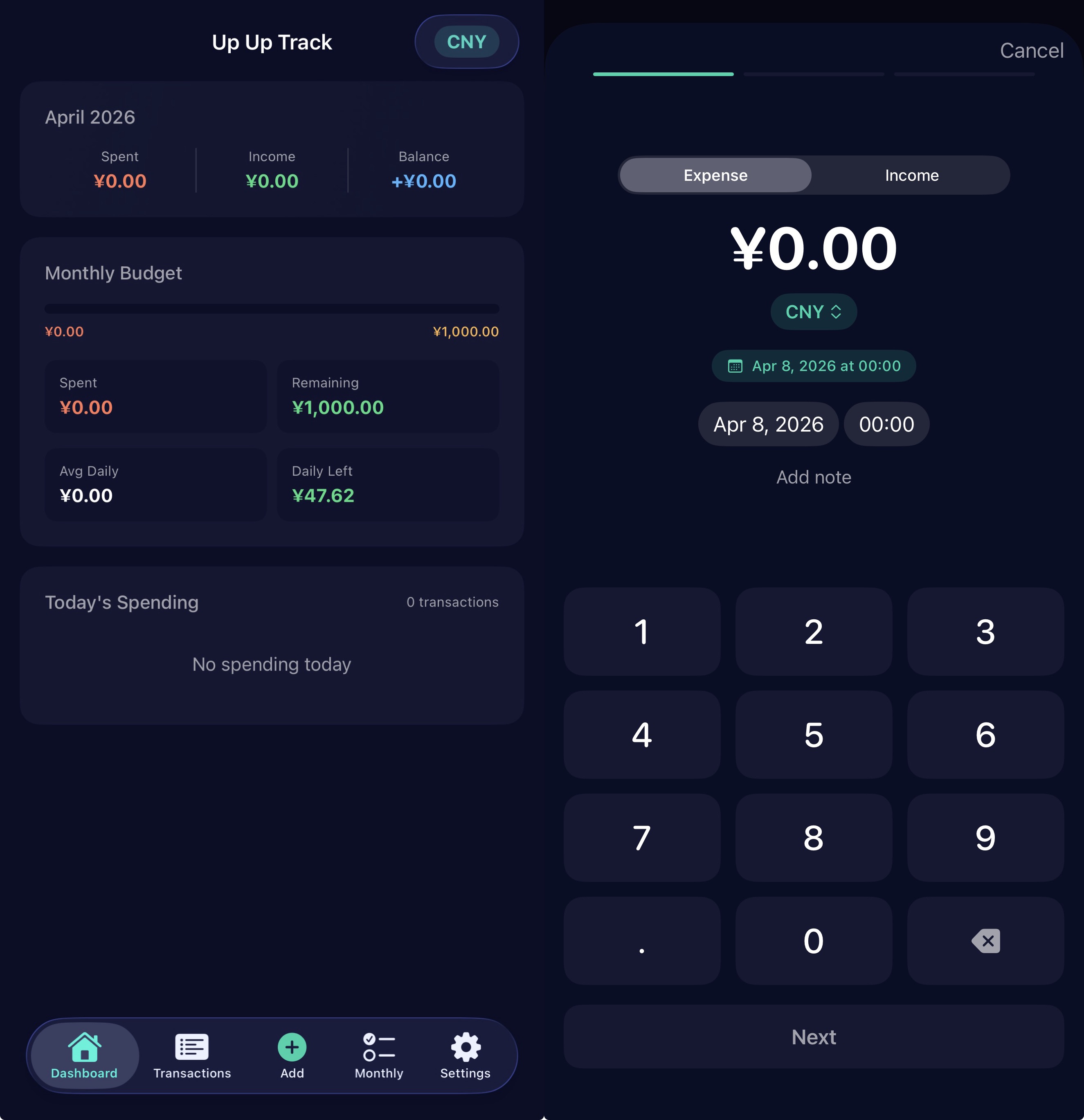 Up Up Track (Image source: 雷科技)
In addition to traditional functionalities, some vibe-coded expense tracking apps have incorporated advanced features such as voice recording, AI-based categorization, consumption analysis, budget planning, and even AI personality settings and integration with various large models.
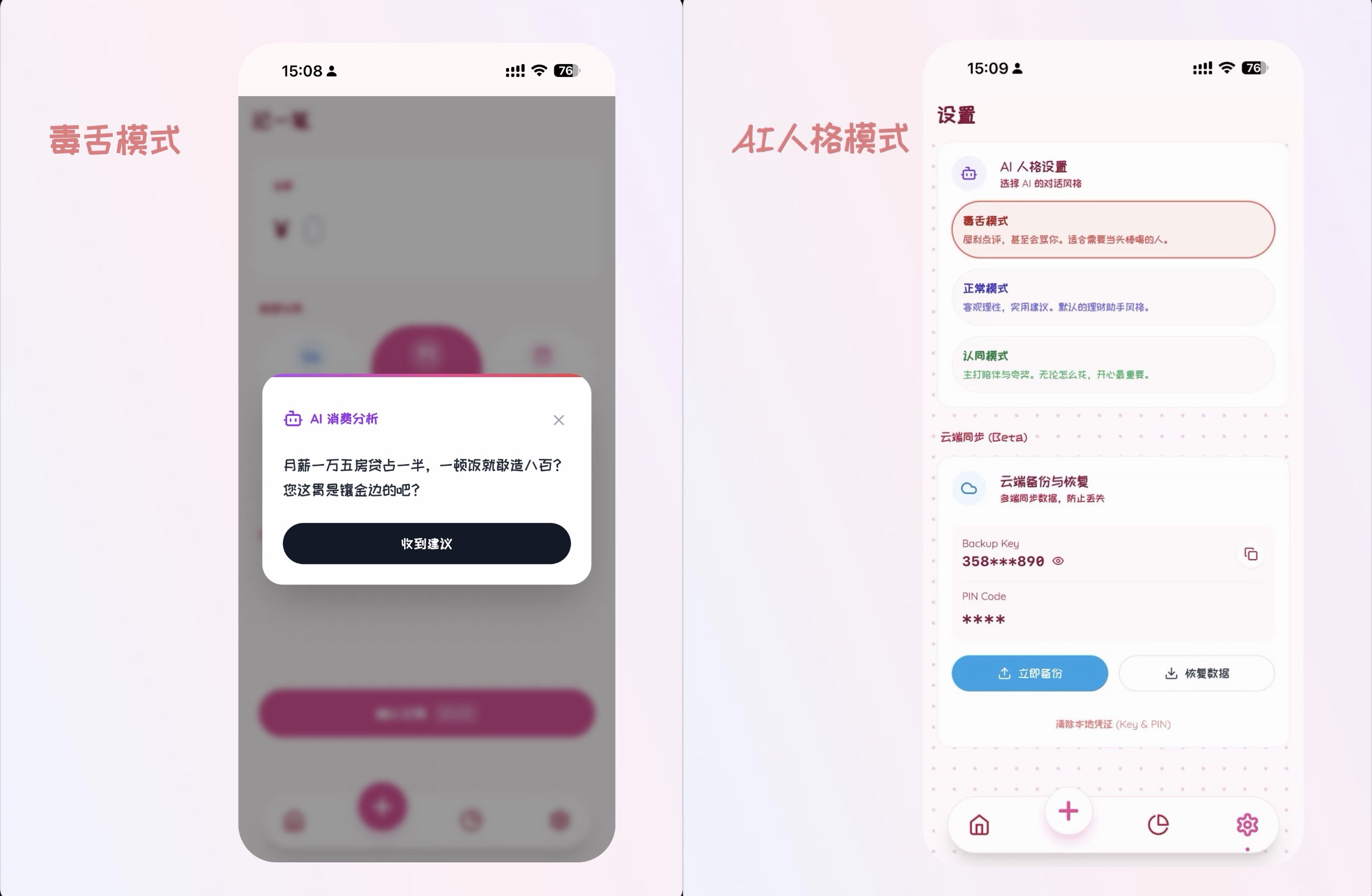 Image source: @墨斗, 小红书
However, the todo list, diary, and expense tracking app categories, where AI programming excels, are already saturated, exacerbating the phenomenon of “reinventing the wheel.” Users have pointed out that there are over 70,000 note-taking apps and 80,000 todo apps on the App Store, each claiming to change the game and asserting, “My app is different.”
In these already saturated app categories, personal developers’ vibe-coded works may only serve as individual projects rather than mass-market products.
Moving Beyond the “Hello World” Trio
Before the rise of vibe coding, todo, diary, and expense tracking apps were already considered “Hello World” level products in the personal developer market. With the influx of vibe-coded works into these entry-level app categories, whether personal developers can move beyond the “Hello World” trio becomes a key measure of their evolution into independent developers. However, for personal developers, breaking out of the “Hello World” stage is incredibly challenging.
 Image source: 豆包AI生成
As personal developers, especially novices, flood the app market with vibe-coded works, the entire App Store ecosystem and quality are undergoing significant changes, with the first victims of vibe coding already appearing.
Some users on 小红书 reported that their vibe-coded apps (enterprise products) received “rectification notices” shortly after being listed, covering necessary reminders and user consent settings, content refinement, user rights, storage and subjects, SDK dual lists, and dynamic update mechanisms, all of which need to be completed within a deadline.
For many novice and personal developers, a larger issue is that only pure offline apps do not require filing. If an app involves iCloud, advertising, or any online functionality, it typically requires a filing process to avoid being blocked during listing. If it involves in-app purchases, it can currently only be filed under a corporate identity.
At the same time, with Apple and other mobile app stores adopting stricter review policies for vibe-coded apps, 雷科技 observed that many personal developers’ related apps failed to pass the review.
A user named @三只寂寞 on 小红书 stated that their vibe-coded app was rejected for triggering clause 4.3, which prohibits the submission of duplicate, templated, low-value, or mass-produced “garbage apps,” leading to rejection or even termination of the developer account.
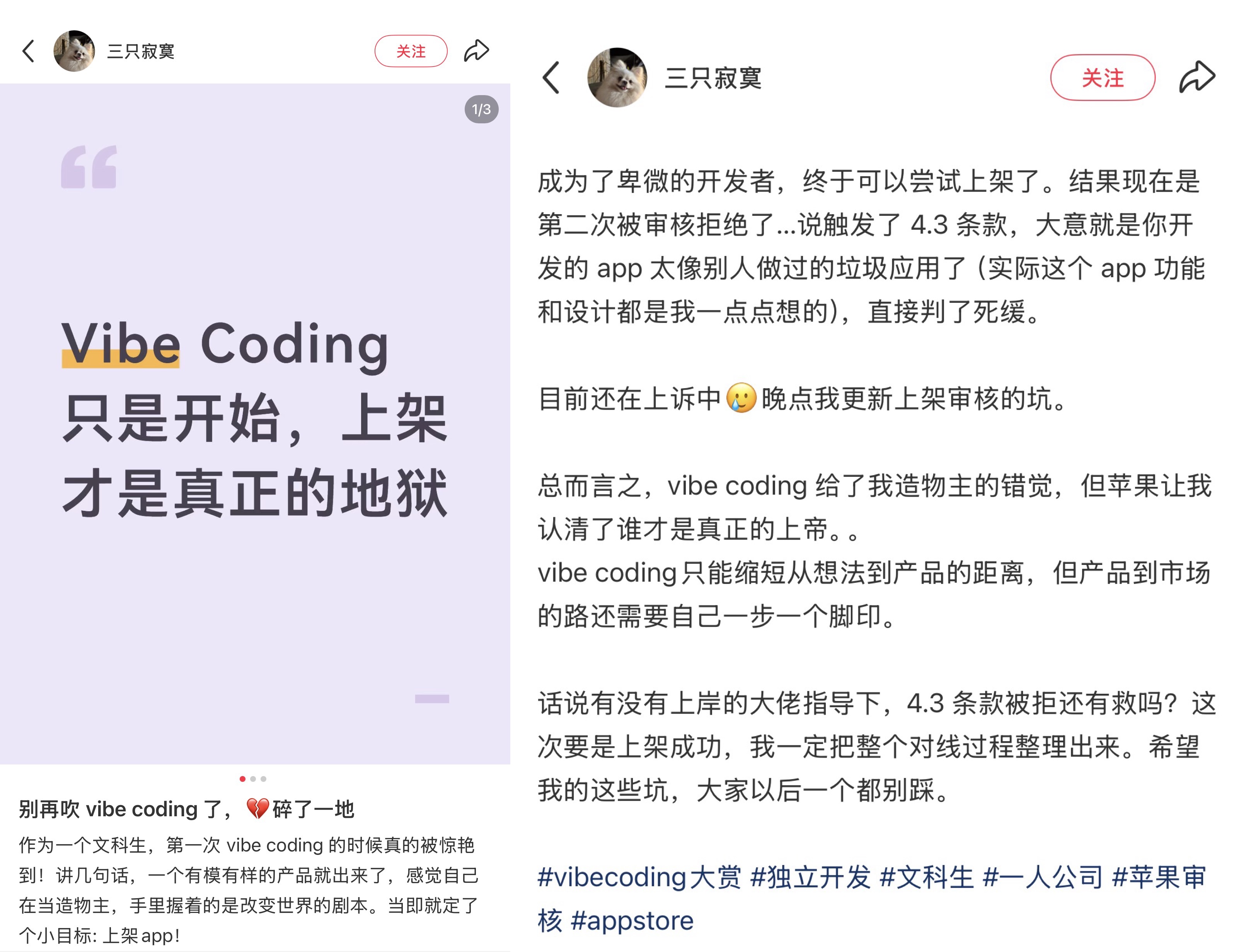 Image source: @三只寂寞, 小红书
According to this user, the app’s features and design were all “thought out bit by bit.”
If Vibe-Coded Apps Don’t Make Money, What About Account Creation and Course Selling?
Contrary to online claims of creating a vibe-coded app in a few hours, 雷科技 found that individual developers with real products listed on the App Store typically take one week to one to two months to complete the full process.
Once personal works are listed on the App Store, attracting users for free downloads, paid downloads, and unlocking in-app purchases, while maintaining a certain level of daily and monthly active users, becomes a challenge for all developers.
This challenge has been evident in the mobile app store market for years; with a new wave of vibe coding developers entering, the difficulty of standing out will only increase.
Is there no solution? Currently, the only viable approach seems to be establishing promotional channels on platforms like 小红书, B站, and WeChat public accounts, vigorously promoting their apps and updates, including actual development processes and progress.
 Image source: @今天好想吃糖水, B站
To some extent, the core audience for vibe-coded apps now consists mainly of young users from platforms like 小红书 and B站. For some novice or personal developers, the vibe coding process and their app works serve merely as tools for personal growth or as a means to gain followers, or they might pursue online training routes, known as “selling courses” or “accompanying runs.”
In a way, this reflects the necessity for these novices and personal developers. Community activities like “bonus funding for promising vibe coding works” can also objectively enhance the exposure and attention of outstanding products.
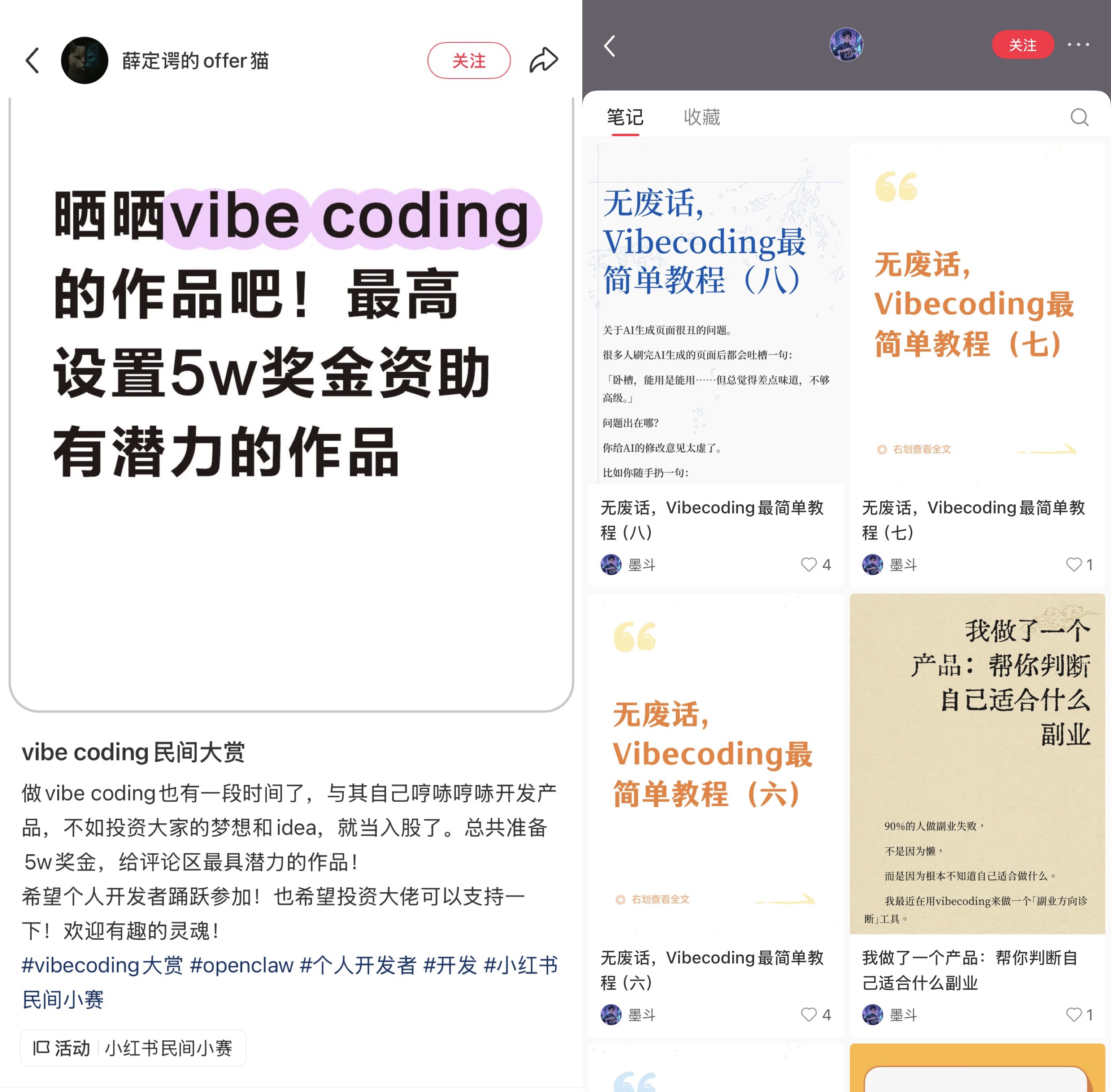 Image source: 小红书
The Greatest Value of Vibe Coding: Turning Personal Creativity into Product Prototypes
In the process of searching for vibe-coded apps, 雷科技 discovered many interesting and innovative app works. For example, a user created the “伴猫入眠” app, which displays a cute sleeping cat animation and plays the sound of a cat purring when the phone is laid flat.
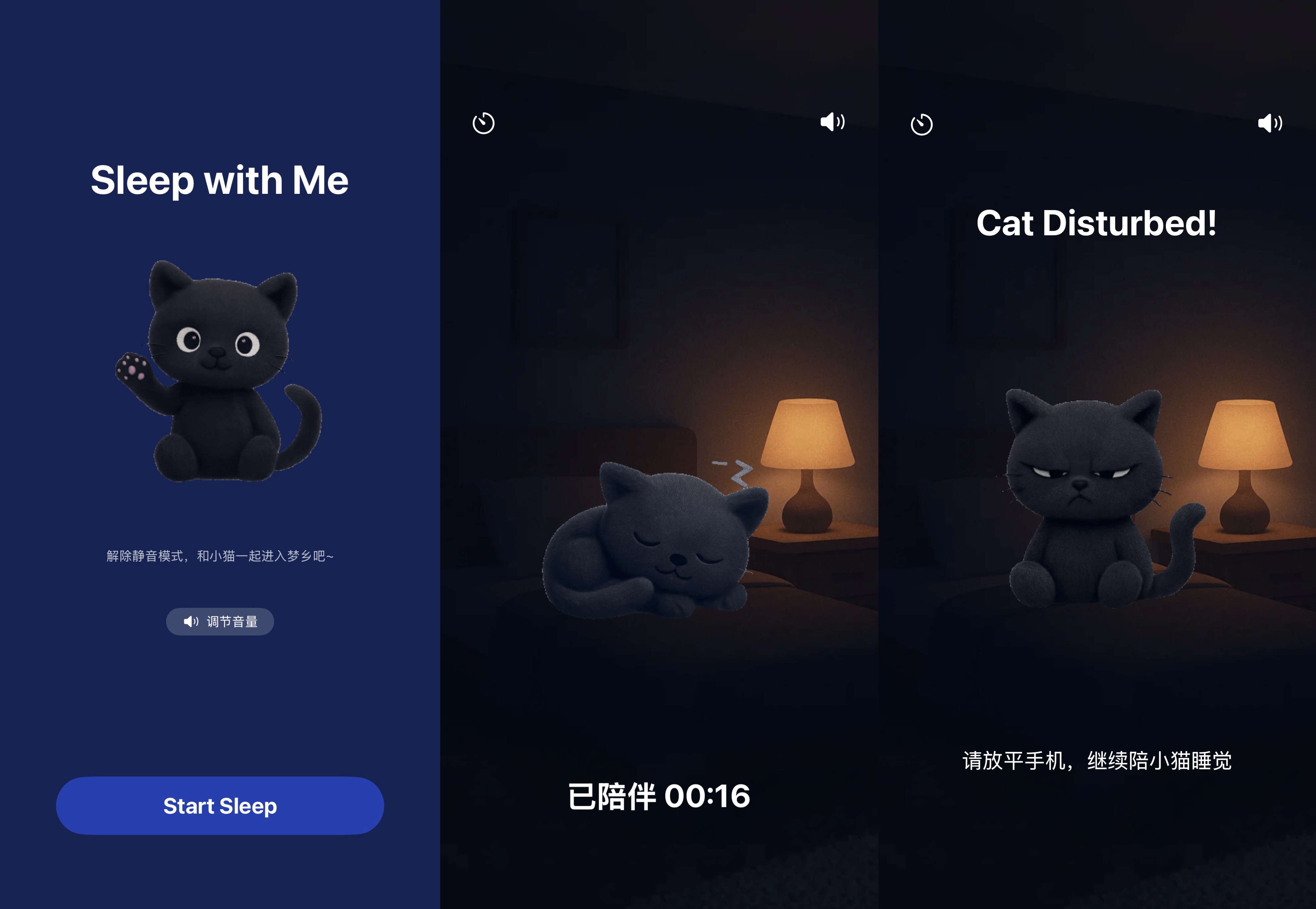 伴猫入眠 (Image source: 雷科技)
Another user developed SOENT, a stress-relief music app. A highlight of SOENT is its ability to access the Apple Music library (note: users must have a subscription), combined with a uniquely designed interface and scene playlists, effectively utilizing Apple’s light music resources.
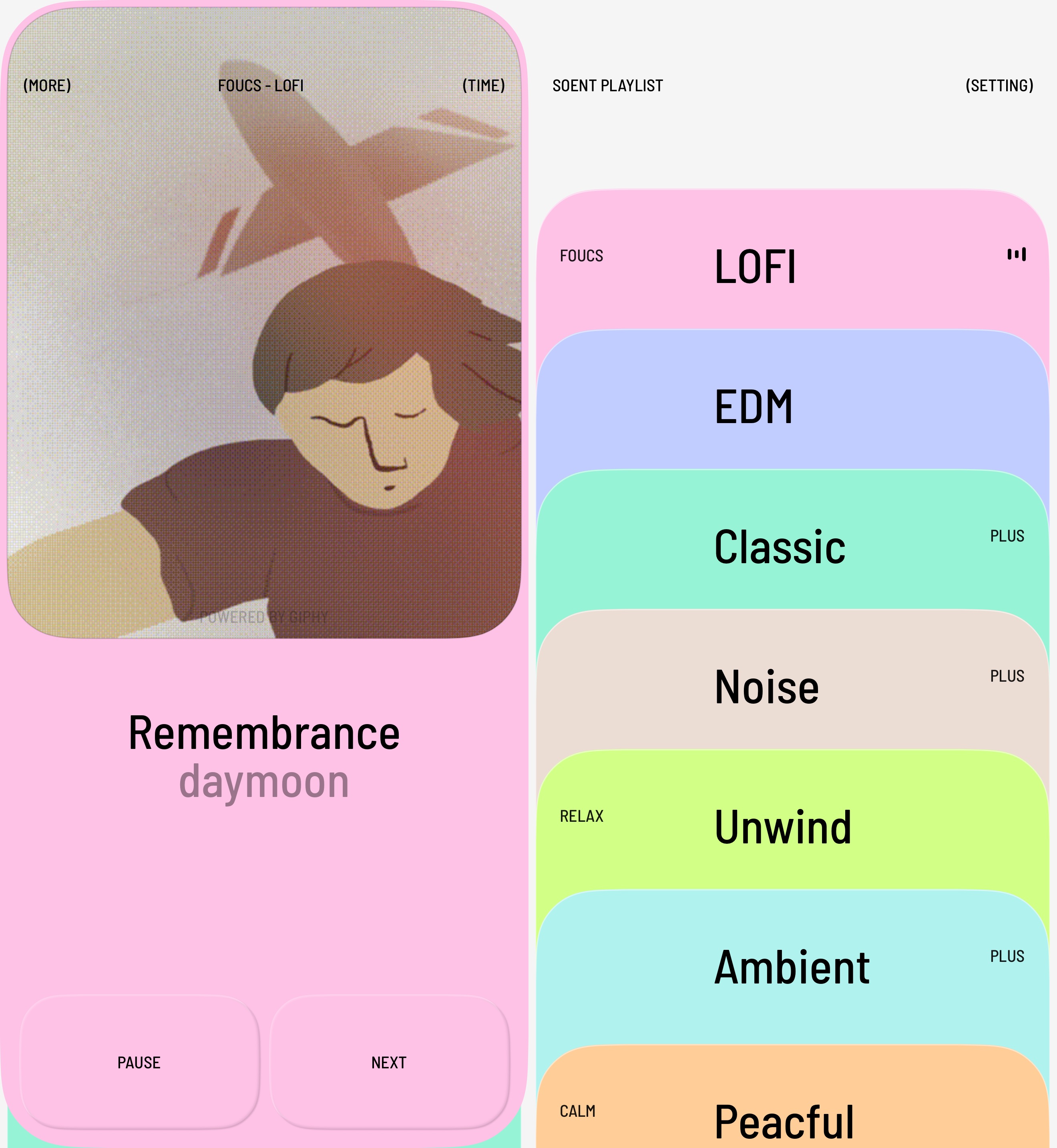 SOENT (Image source: 雷科技)
Addressing the issue of children eating slowly, a user introduced the “饭饭玛特” app, which gamifies mealtime with features like exciting eating tasks, intelligent plate recognition, and exquisite original stickers, helping children develop the habit of wanting to eat.
A user also created a meditation tracking app priced at 6 yuan, featuring an elegant and simple interface, paired with a motivational slogan: “Five minutes a day to regain control of your attention,” indicating the developer’s thoughtful approach.
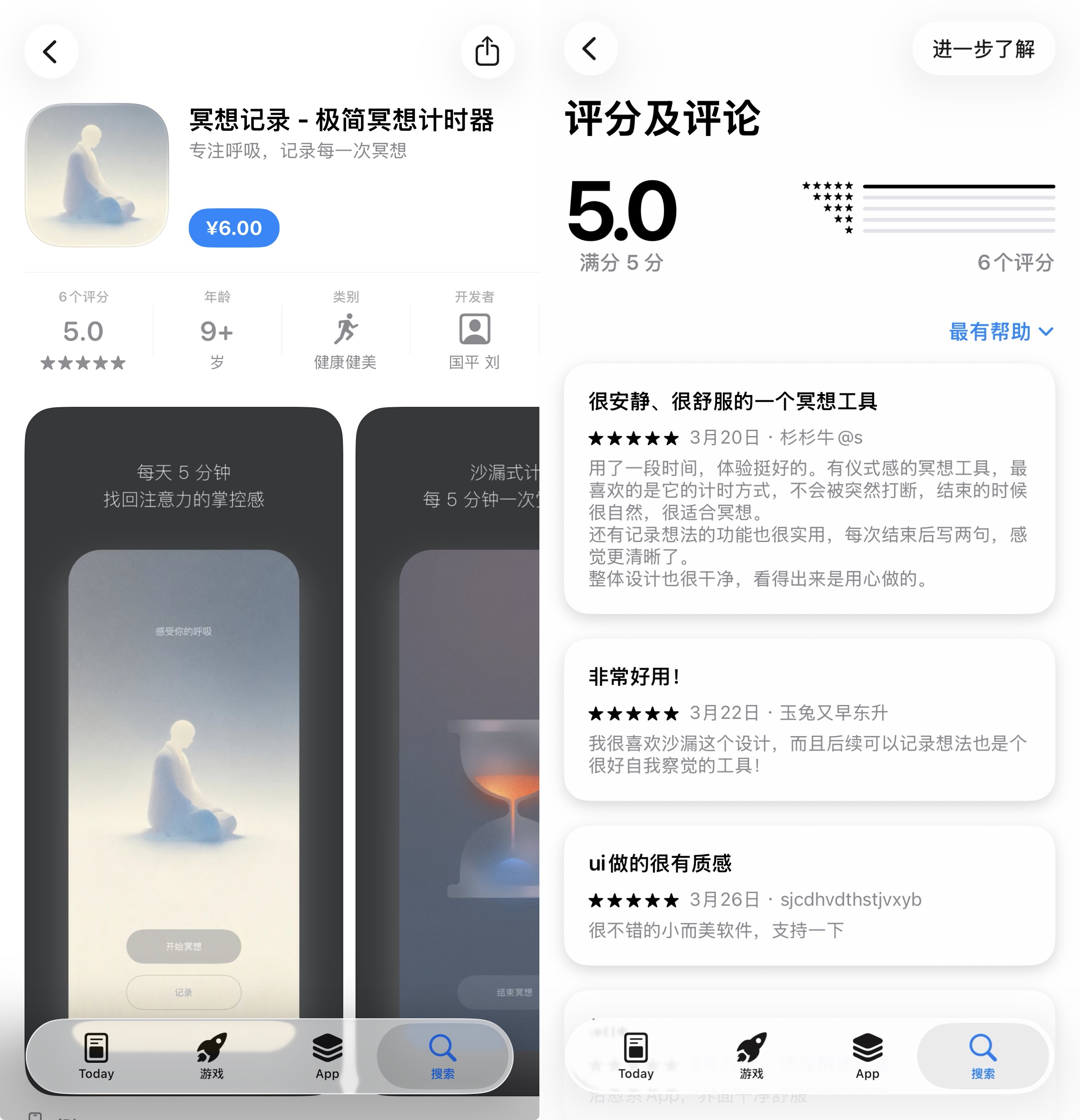 冥想记录 (Image source: 雷科技)
In popular app categories, many personal developers have also introduced vibe-coded products like “split-screen camera” and “trade review.” For these popular category apps, personal developers can leverage vibe coding to create similar products with basic functionalities, which should raise some “crisis awareness” among related products from large enterprises.
Notably, with vibe coding, some app categories that seemed “out of reach” on the App Store can now be “replicated” by personal developers in a very short time. 雷科技 noted an app called “对准星空,” whose developer stated they had wanted to create a real-time star map app for over a decade, but now they can complete the development in just one day using Cursor.
Perhaps this is the greatest value and significance of vibe coding for personal and novice developers: turning personal creativity into product prototypes, making previously unattainable products possible.
Comments
Discussion is powered by Giscus (GitHub Discussions). Add
repo,repoID,category, andcategoryIDunder[params.comments.giscus]inhugo.tomlusing the values from the Giscus setup tool.